Accounting, stock, assets and tax for Nigerian businesses. In one place.
Invoice, hold stock, cost jobs, run the ledger and file your tax from the same set of books — and send your invoices to the NRS from the screen you raised them on.

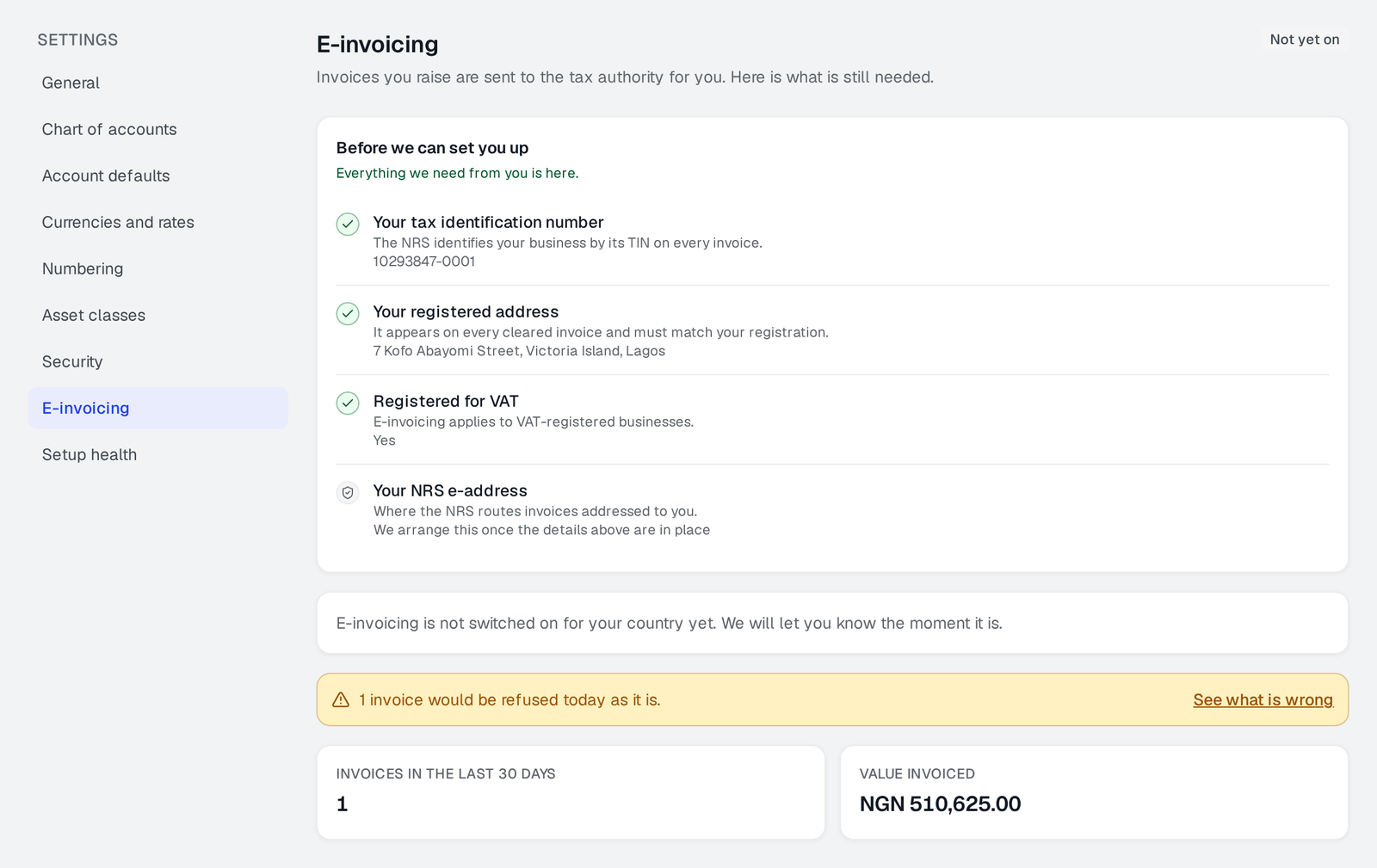
Electronic invoicing is the reason most people arrive
The Nigeria Revenue Service requires invoices to be reported electronically, and the dates are fixed. The accounting packages sold here largely do not solve it — you end up raising the invoice in one place and reporting it in another.
FreshExe validates every invoice before it goes, transmits it through an accredited access point provider, and stores the IRN and QR code against the invoice so the copy you print is the copy that cleared. Where one is refused, it is grouped with the others that failed for the same reason and told to you in plain language.
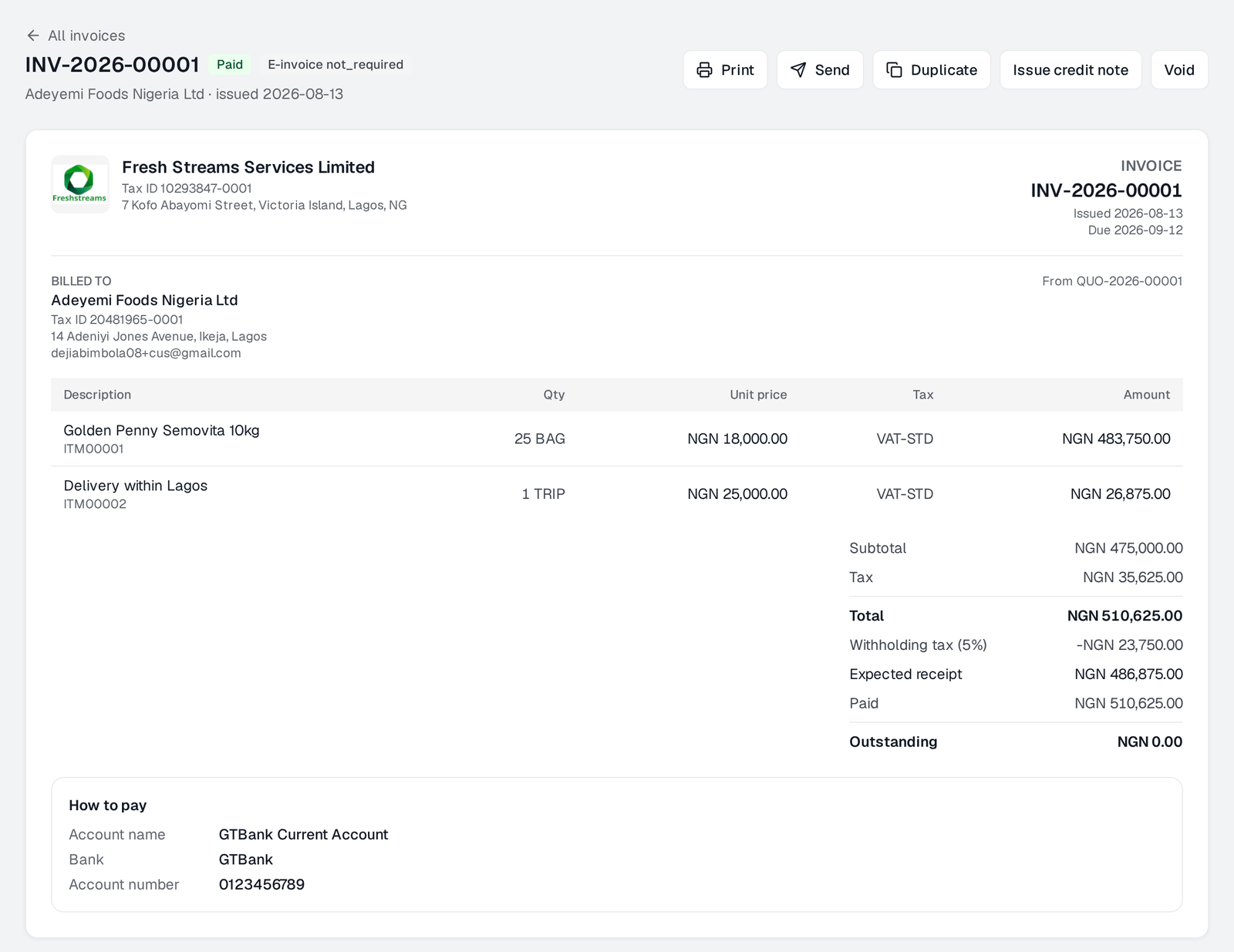
Invoices that carry what a Nigerian invoice needs
VAT, withholding deducted by the customer, and the bank account the money should land in — printed on the invoice, not explained in a covering email.
Receipts settle the invoices they paid, and the receipt emailed to the customer acknowledges the tax they withheld and the reference for it.
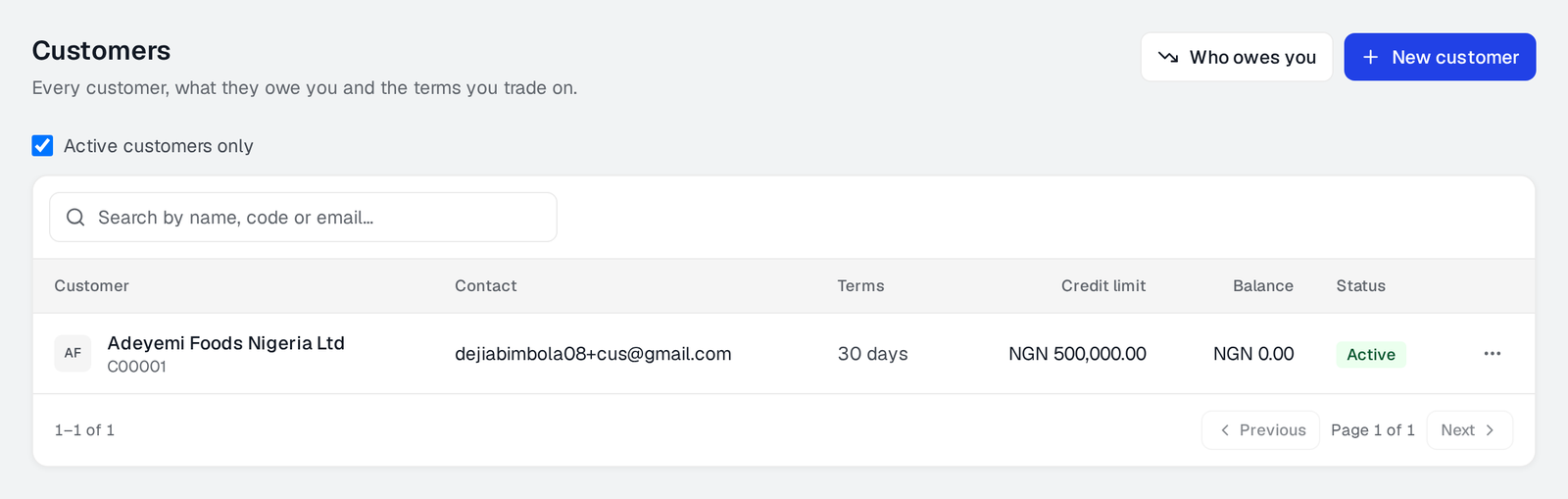
Know who owes you
Every customer's balance, split by how late it is, oldest at the top. Open the customer and you see what they bought, when they last paid, and which lines have gone quiet.
Email the invoice again from the screen you are looking at, and the receipt when they pay.
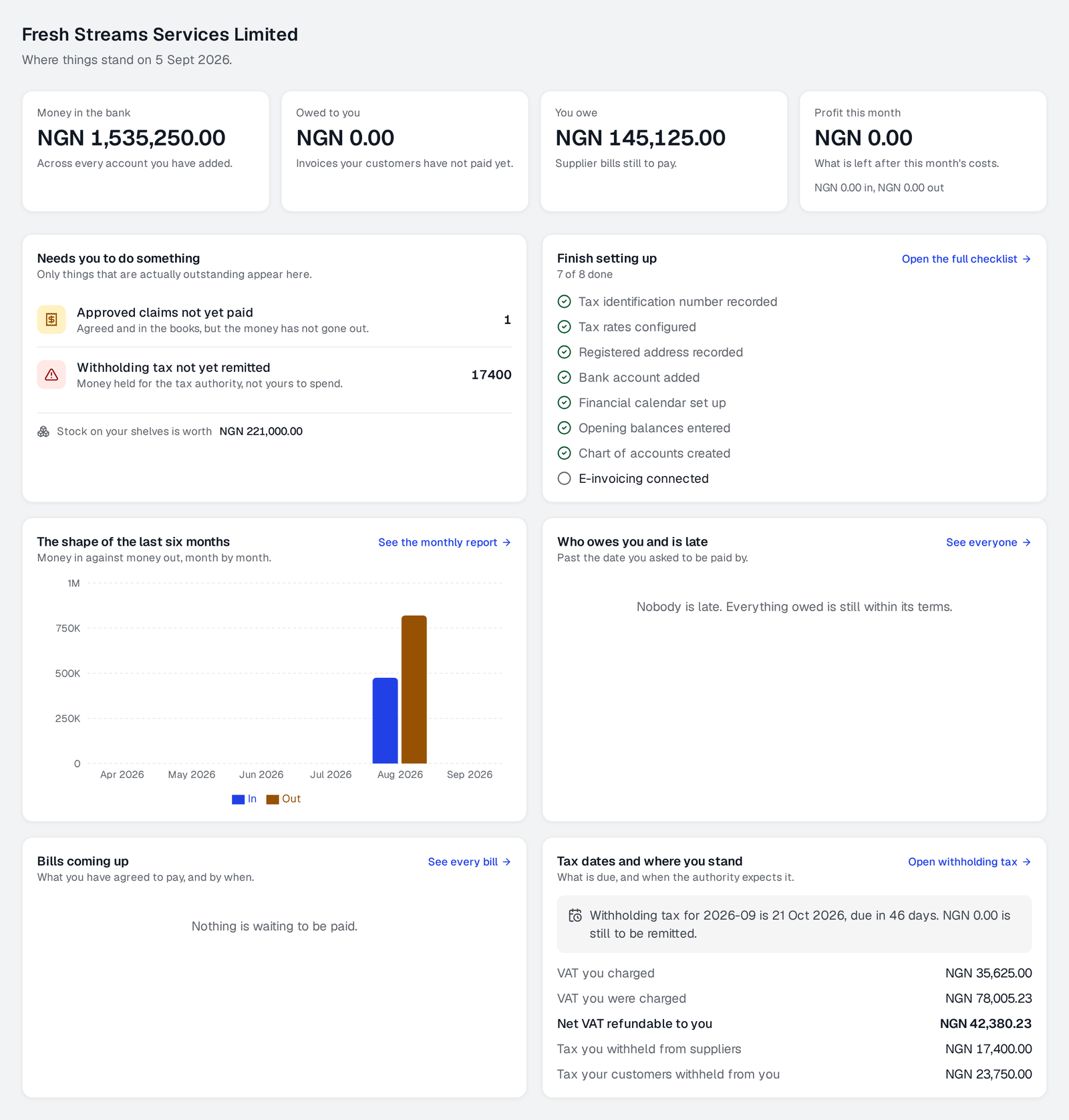
Stock, jobs and assets in the same books
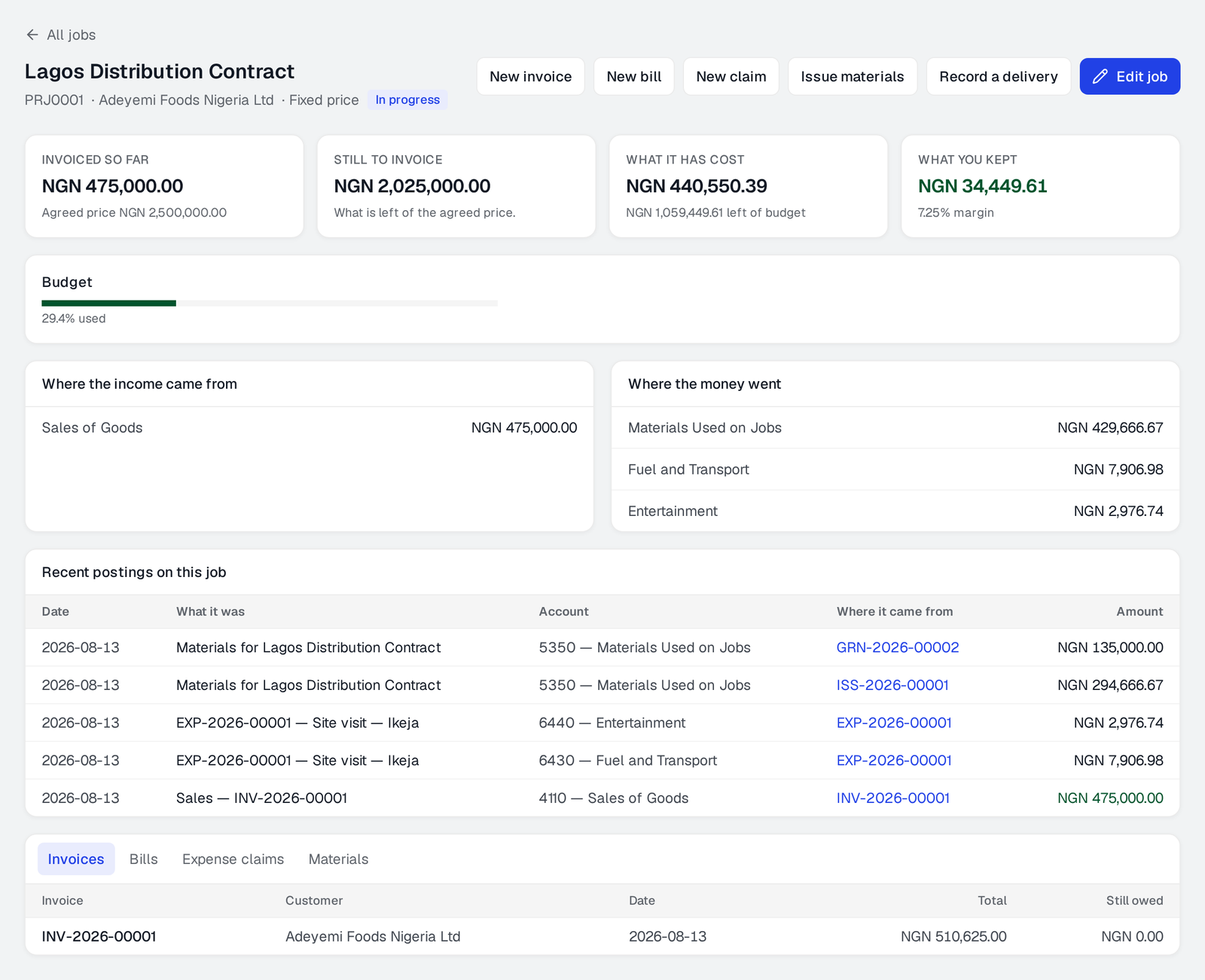
Receive goods, issue materials to a site, count what is on the shelf, and every movement posts to the ledger as it happens rather than in a monthly catch-up.
Fixed assets sit in the same place: a register, depreciation runs you can see the history of, scannable tags, and verification counts.
Your accountant works free
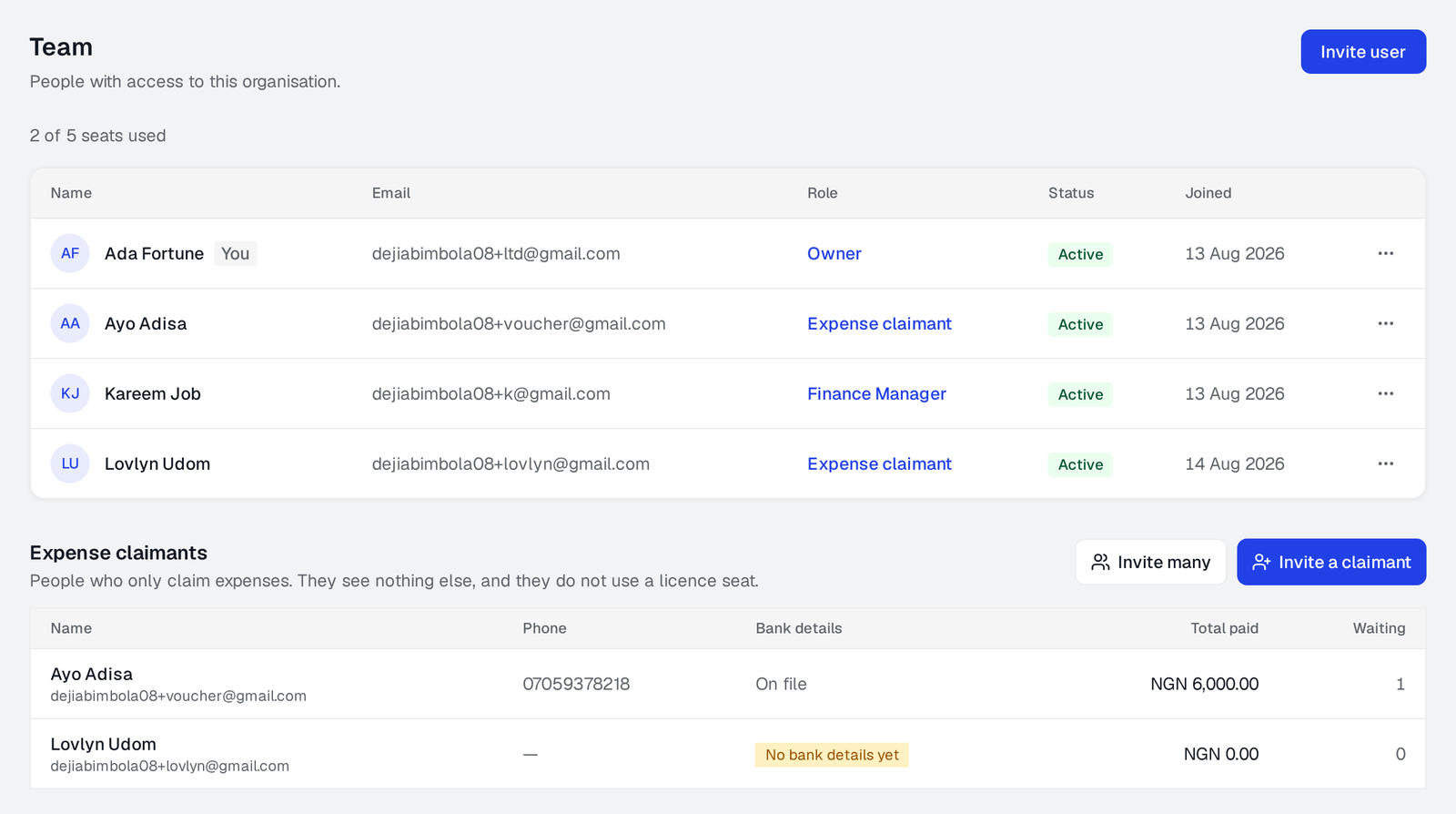
Invite your accountant and their seat costs nothing, at every business they work in. They see one screen listing which clients need attention and which returns are due.
People who only submit expenses are free too, so a driver or a site supervisor can send in a receipt without taking up a paid seat.
It works on a phone
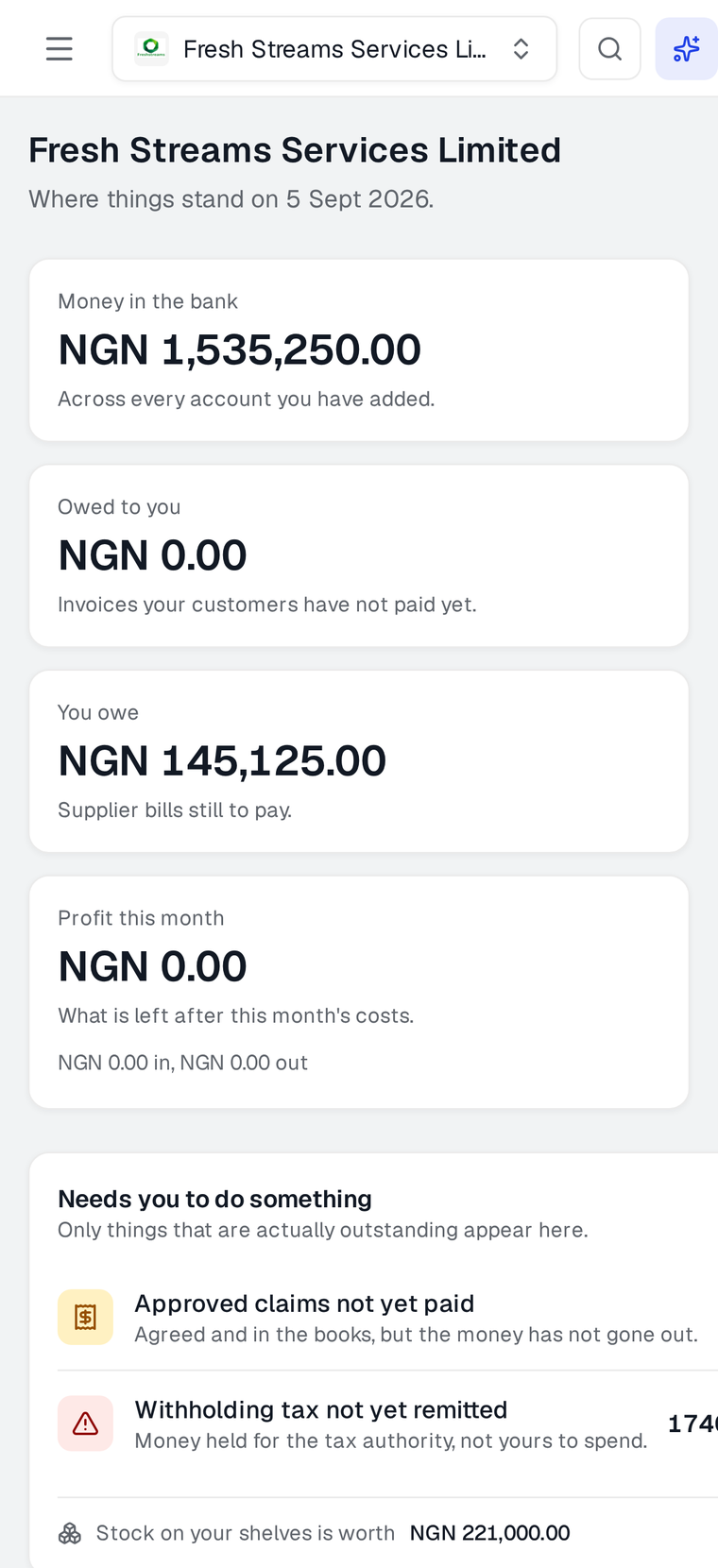
The web app is built for a phone first, and there is an Android app for the people who are not at a desk — approving a bill, photographing a receipt, checking a balance.
What it costs
From ₦7,500 a month for one person to ₦120,000 for a group of companies, with three months free on a yearly licence. Your accountant's seat is free, and so are the people who only submit expenses.
Try it with your own figures
Fourteen days, every feature of the plan you pick, and no card until you decide. If it is not the right thing, close the tab.